 Claude
dbce646e7b
setenv replaced a variable's string with a new allocation and freed the
old one, and unsetenv freed it as well, so a pointer that getenv had
returned for that variable dangled. A guest that reads such a pointer
after setenv(name, value, 1) reads freed host memory: AddressSanitizer
reports a heap-use-after-free on that read.

FreeBSD 11.4's getenv.c, which holds the setenv, unsetenv and putenv the
console's libc exports next to getenv, never frees a variable's string
("No previous variables are ever freed here to avoid causing a
segmentation fault in a user's code", lib/libc/stdlib/getenv.c lines
449-520 at 8c639945a4). setenv and unsetenv mark the old string
inactive; setenv writes the new value over the latest string of that
name when the value fits and allocates a new string otherwise; putenv
strings stay the caller's and are only forgotten.

The guest environment now keeps every string it allocates with its value
capacity and an active flag and follows that code: getenv and the time
zone lookup read the name's latest active string, setenv reuses the
latest string of the name when it fits, an unset one included, and
otherwise appends a new one and deactivates the old, putenv replaces an
earlier putenv string or deactivates the setenv one, and unsetenv
deactivates them all. Built on the host next to this library, FreeBSD's
getenv.c gave the same results, errno, pointer reuse and contents of
every earlier pointer over 160,000 random calls once the putenv flag it
leaves uninitialized in new setenv strings was cleared; the debt entry
records that the console may allocate where this reuses.

guest_environment checks the reuse, that earlier values stay readable
after a longer setenv and after unsetenv, and that putenv and setenv
leave each other's strings alone.

Co-Authored-By: Claude Opus 5.5 <[email protected]>
Claude-Session: https://claude.ai/code/session_01DXPnhogDW4zpeNCBro4Ctt
English | Português (Brasil) | Español | 简体中文 | Русский
About
Tool for automatic executables porting to Linux and Windows.
The relinker-only build runs on macOS, including Apple silicon.
Web converter - files stay on your device.
Includes a relinker that converts executable to the target system's native format and implementations of system prx libraries suitable for dynamic linking. No emulation or separate runtime process.
Discord, Usage, Build instructions, Architecture, Technical debt of the project, code style conventions, contributing
Status


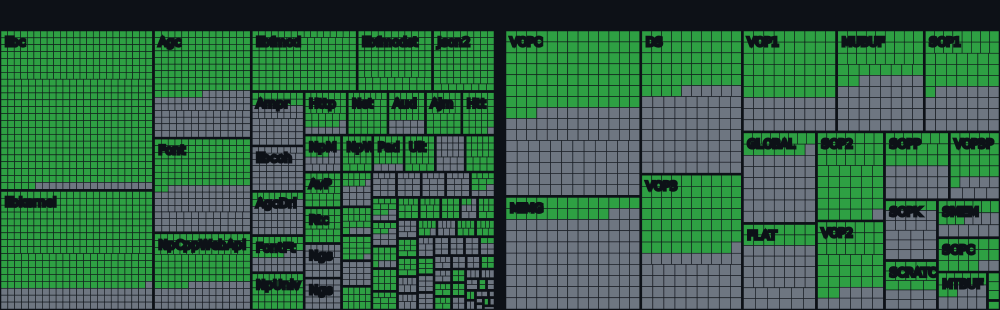
* System libraries: percentage of the functions known to the project so far (declared in core/libs/prx), not of every PS5 system function. The total grows as more functions are declared.
Unsupported or unexpected states strictly throw std::runtime_error. what() is printed to stderr and the process terminates.
The shader recompiler successfully produces SPIR-V (validated via Spirv-Tools when built with ANYPS5_ENABLE_SPIRV_TOOLS).
Compatibility
Per-game status and test reports live in the Game bring-up discussions, one thread per title.
Input mapping
SDL-mapped game controllers are supported, including analog sticks and triggers. Keyboard and mouse controls can be configured with an anyps5-input.ini file. See input mapping for the supported devices and configuration format.
Disclaimer
This project is intended for interoperability, research, preservation, and compatibility purposes. It does not include, distribute, or require copyrighted software, firmware, cryptographic keys, or proprietary libraries. Users are responsible for ensuring that any binaries used with this project are obtained and used in accordance with applicable laws and their respective license terms.
AnyPS5 is an independent project and is not affiliated with, authorized or endorsed by Sony Interactive Entertainment. "PlayStation" and "PS5" are trademarks of Sony Interactive Entertainment Inc.
License
This project is licensed under the GNU General Public License version 2 only.