 Dean Galvin
dbe16fb28c
A program with an atomic on a V# it specializes was compiled as
address-based (usesDma) so that the atomic's unaligned-address check could
call the fault function. The atomic itself goes through the element's
storage buffer and nothing in such a program reads the address tables. In
the driver an address-based build leases all registered guest memory and
binds every V# of the program in place inside a host import, so none of
its elements is staged in device memory, the atomic one included.

The atomic now asks for the fault buffer alone (usesFaultBuffer) and
records the fault through RecordBdaFaultWords, which has both forms. The
fault record, the stop of the invocation and the atomic are unchanged. The
64-bit fault address needs shaderInt64, as the scalar buffer load does. A
tessellation-control program with such an atomic is refused as before.

Test: agc_shader_memory compiles a buffer_atomic_inc on a specialized V#
and requires no address table binding, one fault buffer, one call of the
fault function, logical addressing and the atomic element flag; without
shaderInt64 the program is refused.
About
Tool for automatic executables porting to Linux and Windows.
Includes a relinker that converts executable to the target system's native format and implementations of system prx libraries suitable for dynamic linking. No emulation or separate runtime process.
Usage, Build instructions, Architecture, Technical debt of the project, code style conventions, contributing
Status


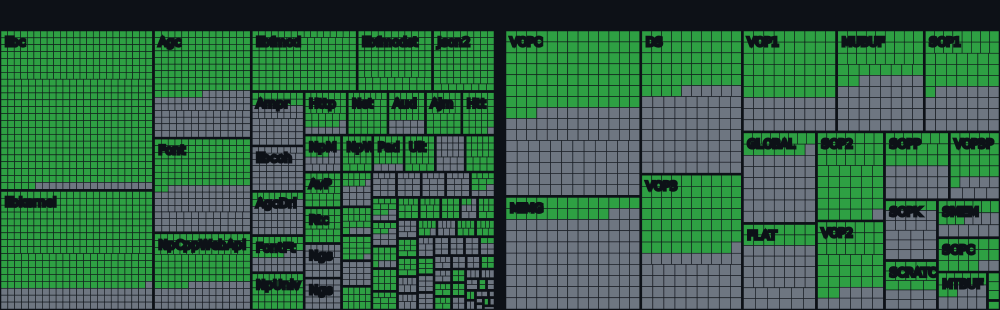
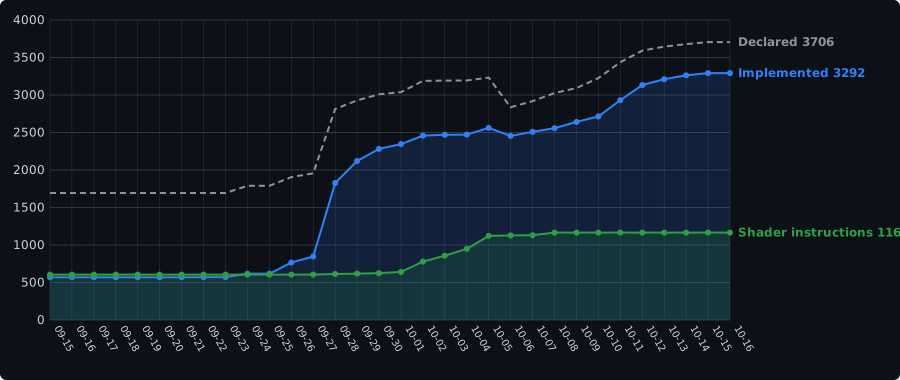
* System libraries: percentage of the functions known to the project so far (declared in core/libs/prx), not of every PS5 system function. The total grows as more functions are declared.
Unsupported or unexpected states strictly throw std::runtime_error. what() is printed to stderr and the process terminates.
The shader recompiler successfully produces SPIR-V (validated via Spirv-Tools when built with ANYPS5_ENABLE_SPIRV_TOOLS).
Compatibility
Per-game progress (stage reached, open blockers, libraries and GPU coverage) is tracked on the blocker map, a community project built from public GitHub data (source). Test reports go in the Game bring-up discussions, one thread per title.
Input mapping
SDL-mapped game controllers are supported, including analog sticks and triggers. Keyboard and mouse controls can be configured with an anyps5-input.ini file. See input mapping for the supported devices and configuration format.
Disclaimer
This project is intended for interoperability, research, preservation, and compatibility purposes. It does not include, distribute, or require copyrighted software, firmware, cryptographic keys, or proprietary libraries. Users are responsible for ensuring that any binaries used with this project are obtained and used in accordance with applicable laws and their respective license terms.
License
This project is licensed under the GNU General Public License version 2 only.